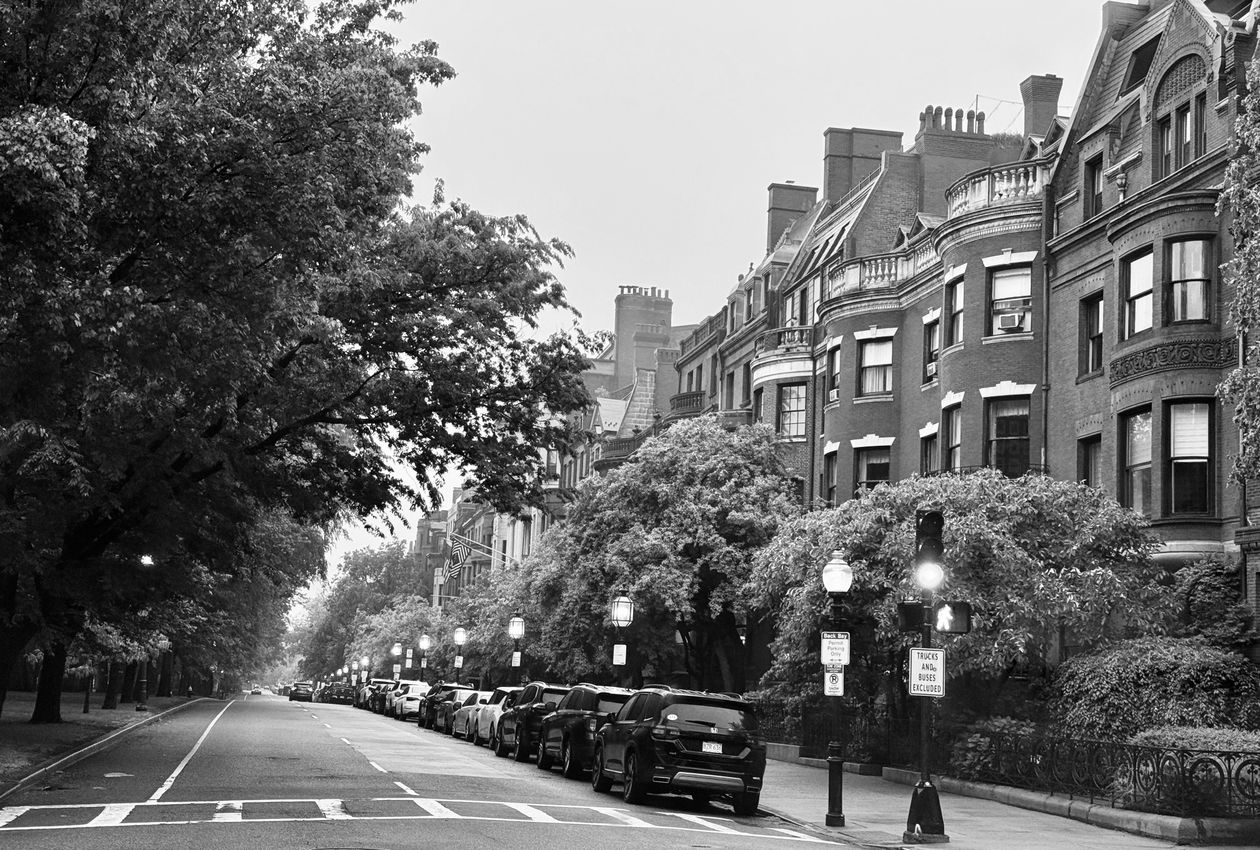
When the final spreadsheets of the workday are closed and the kinetic energy of downtown Boston begins to wind down, an entirely different rhythm takes hold in the upper alcoves of Beacon Hill. Rather than rushing straight into the evening transit queues at Park Street, carve out an intentional sixty-minute transition by losing yourself in the quietest residential square in New England.
Begin your walk at 5:30 PM by ascending the gentle, brick-paved incline of Mount Vernon Street. The roar of commuter traffic on Charles Street quickly dissolves, replaced by the muffled echo of footsteps on historic paving stones. Step into Louisburg Square, a private 19th-century enclave defined by stately Greek Revival row houses, immaculate black wrought-iron fences, and a central private park shaded by mature elms. As dusk approaches, the neighborhood's authentic gas lamps flicker on one by one, casting a warm amber glow across the weathered brick and polished brass knockers.
Take a slow, unhurried lap around the perimeter of the square, letting the visual harmony of federal architecture steady your breathing. The absolute absence of commercial storefronts or automotive noise creates an acoustic sanctuary right in the heart of the city. Continue your walk down the hidden pedestrian alley of Willow Street, where clinging ivy and gas lanterns complete the timeless atmosphere. This quiet evening ritual acts as a psychological buffer, ensuring you leave the stress of the corporate office entirely behind before heading home.
A slower beginning
The best version of this itinerary begins before the first landmark. Leave a little room around the plan: an extra ten minutes to notice the quality of the light, a bench that looks inviting, or a side street that feels worth following. Breezio routes are intentionally spacious because restoration rarely arrives on a strict schedule. The destination matters, but the transition is part of the experience.
For a city break to feel genuinely renewing, it helps to treat attention as the main thing you are carrying. Put the phone on silent, choose comfortable shoes, and let the first walk be almost observational. Notice how the neighborhood changes in texture from one block to the next. The small shift from pavement to grass, brick to water, or traffic to birdsong is often the first signal that the day has begun to soften.
The shape of the place
Every destination has a rhythm of its own. In Louisburg Square, Beacon Hill, Boston, MA, that rhythm comes from the relationship between its built edges and open spaces. Look for the details that are easy to miss when moving quickly: a handrail worn smooth by generations, a window catching late light, or a row of trees that makes an ordinary path feel sheltered. These details are not background decoration; they are the architecture of calm.
Rather than trying to see everything, choose one small area and stay with it. A concentrated walk creates a stronger sense of place than a checklist of attractions. Follow the route at the pace of conversation, even if you are walking alone. When you give a neighborhood enough time, it begins to offer its quieter layers.
A useful pause
Plan one pause that has no productive purpose. It might be a warm drink, a view across the water, a few pages of a book, or simply a place to sit. The value of the pause is not what you accomplish inside it. The value is that it gives your mind a clean surface. In a week crowded with messages and decisions, a blank hour can feel surprisingly generous.
If you are traveling with someone, resist the instinct to fill every silence. Shared quiet is one of the most generous forms of companionship. If you are alone, let the surrounding sounds become enough company: footsteps, wind through leaves, a distant train, or the low conversation of a café. This is how a short outing becomes something you remember rather than simply complete.
Small rituals make a day memorable
A restorative day benefits from a few modest rituals. Start with a favorite layer of clothing, carry water, and choose one sensory detail to look for: the scent of woodsmoke, the color of doors, or the sound of tide against stone. These anchors help the mind stay in the present. They also make a repeat visit feel fresh because the same place will never offer the exact same light, weather, or mood twice.
At the end of the route, write down one sentence about what felt different. It could be as simple as "I noticed how quiet the trees were after rain." This small act gives the experience a landing place. Rest is not only the absence of effort; it is also the chance to absorb what you have just seen.
A gentler way to plan
Good planning should make a weekend feel easier, not more crowded. Check opening hours, seasonal access, weather, and transit before leaving, but keep the rest lightly held. Build in a generous buffer for meals and movement. If a place is busier than expected, choose the quieter parallel street or move the highlight to another hour. A flexible plan protects the mood you came to find.
This approach is especially useful around Boston, where a short distance can contain many different atmospheres. A historic square, a library, a path beside the Charles, and a coastal town can all feel close on a map but ask for different kinds of attention. Allowing the day to change is not a failure of planning; it is an invitation to stay responsive.
The return home
The final part of a restorative outing is often the return. Leave enough time to travel back without turning the last hour into a race. Notice how the city looks after you have spent time near trees, water, books, or open sky. Familiar streets may feel newly proportioned. That contrast is one of the gifts of a nearby escape: you can return to ordinary life without bringing the whole week's tension with you.
Once home, keep one element of the day alive. Make the tea you enjoyed, place the found postcard on your desk, or leave the phone in another room for another half hour. A weekend reset becomes more valuable when it changes the shape of the evening that follows it.